Top 5 Lightweight Mini Drones for Travel
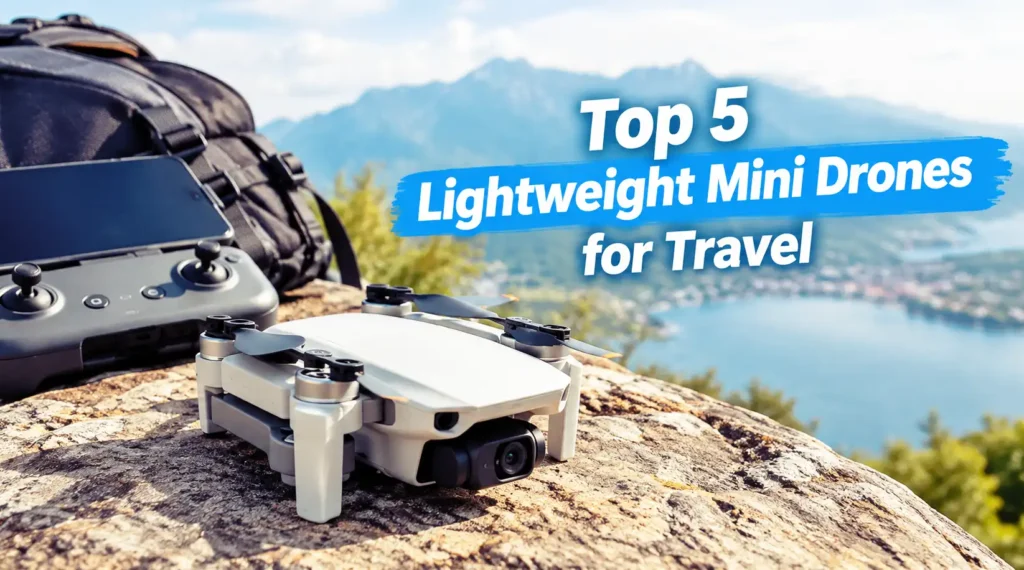
Lightweight mini drone illustration for travel photography and aerial adventures.
Travel photography has become more exciting with the rise of lightweight mini drones. You no longer need to carry bulky equipment to capture stunning aerial views of mountains, beaches, forests, or city skylines. Modern mini drones are compact, easy to transport, and capable of recording impressive footage, making them excellent companions for travelers who want to capture their adventures from a different perspective.
However, choosing the right drone isn’t just about finding the smallest model available. Camera quality, battery life, flight stability, portability, and ease of use all play important roles. Some drones are designed for cinematic landscape photography, while others focus on automatic filming that lets you record yourself without mastering complicated flight controls.
The good news is that you have several options, whether you’re a beginner looking for an affordable drone or an experienced content creator who wants more advanced features. Models such as the DJI Mini 4K, DJI Mini 3, and DJI Mini 4 Pro offer different combinations of portability and camera performance, while alternatives such as the Potensic ATOM and HOVERAir X1 serve different travel needs.
In this guide, we’ll explore the top five lightweight mini drones for travel, highlighting their main features, advantages, and limitations. By the end, you’ll have a clearer idea of which drone suits your budget, photography style, and next travel adventure.
Why Choose a Lightweight Mini Drone for Travel?
A lightweight mini drone makes it easier to capture aerial footage without filling your backpack with heavy equipment. Many models feature foldable arms, compact controllers, and portable batteries, allowing you to carry them alongside your smartphone, camera, and other travel essentials. They’re particularly useful for road trips, hiking adventures, and vacations where portability matters just as much as image quality.
Weight can also affect drone regulations. Drones weighing less than 250 grams may qualify for certain exemptions or simplified requirements in some countries, although this doesn’t mean they’re automatically legal to fly everywhere. Registration rules, restricted airspace, privacy regulations, and local flight restrictions can still apply, so check the rules before taking off at your destination.
What Makes a Good Travel Drone?
The best travel drone balances camera performance, battery life, durability, and ease of use. A stabilized camera helps produce smooth footage, while reliable positioning and beginner-friendly controls make flying less stressful. It’s also worth considering the availability of spare batteries, replacement propellers, and a protective carrying case, especially if you plan to use your drone frequently.
Your travel style matters, too. If you want cinematic footage of landscapes and coastlines, a traditional camera drone with a mechanical gimbal is usually a strong choice. If you prefer recording yourself while walking, cycling, or exploring scenic locations, a compact self-flying drone may be more convenient. Choosing the right type from the beginning can save you money and help you get more enjoyment from your purchase.
Top 5 Mini Drones for Travel
Choosing a travel drone becomes much easier when you compare the features that matter most, including camera quality, flight time, portability, and price. The following five lightweight mini drones offer different advantages, from affordable 4K photography to advanced filmmaking and hands-free travel videos.
Whether you’re planning a weekend getaway, an international vacation, or an outdoor adventure, these options can help you capture memorable footage without carrying bulky equipment. Let’s look at what each drone offers and which type of traveler will benefit most from it.
1. DJI Mini 4K – Best Budget Travel Drone
The DJI Mini 4K is an excellent starting point for travelers who want high-quality aerial footage without spending too much. Weighing approximately 246 grams, it features a foldable design, a 12MP camera, 4K video recording at up to 30 frames per second, and a three-axis mechanical gimbal for smoother footage. DJI advertises a maximum flight time of 31 minutes under controlled testing conditions, making it suitable for capturing landscapes, beaches, and scenic viewpoints during your trip.
One of its biggest advantages is its straightforward operation, which makes it appealing to beginners who are still learning to fly. However, the Mini 4K lacks advanced obstacle-avoidance sensors, so you’ll need to pay attention to trees, buildings, power lines, and other hazards. Overall, it’s a practical choice if you want a compact drone with reliable camera performance at a relatively affordable price.
2. DJI Mini 3 – Best Mini Drone for Long Flight Time
The DJI Mini 3 is an excellent option for travelers who want longer flight times and impressive image quality in a compact design. Weighing approximately 248 grams in its standard configuration, it features a 1/1.3-inch camera sensor, a 12MP camera, and 4K video recording at up to 30 frames per second. Its three-axis mechanical gimbal helps keep footage stable, while its ability to capture true vertical video makes it particularly useful for creating travel content for TikTok, Instagram Reels, and YouTube Shorts.
Battery life is another major advantage. DJI advertises up to 38 minutes of flight time with the standard battery and up to 51 minutes with the optional Intelligent Flight Battery Plus, where supported. However, actual flight time depends on weather and flying conditions, and the larger battery increases the drone’s takeoff weight beyond 249 grams. The Mini 3 lacks advanced obstacle sensing, but it’s still a compelling choice for travelers who prioritize scenic photography, vertical videos, and longer flying sessions.
If you’re always on the lookout for innovative tech, explore 9 Crazy-Cool Gadgets You’ll Want to Own in 2026 to discover more exciting gadgets worth adding to your collection.
3. DJI Mini 4 Pro – Best Premium Travel Drone
The DJI Mini 4 Pro is an excellent choice for travelers who want advanced camera features and improved flight safety without carrying a bulky drone. Weighing less than 249 grams in its standard configuration, it features a 1/1.3-inch camera sensor, 48MP photo capabilities, and 4K HDR video recording at up to 60 frames per second. Its three-axis mechanical gimbal supports smooth footage, while true vertical shooting makes it convenient for creating travel videos for social media. DJI also advertises up to 34 minutes of flight time with the standard battery under controlled testing conditions.
One of its biggest advantages is omnidirectional obstacle sensing, which helps detect obstacles from multiple directions and makes navigating unfamiliar environments easier. The drone also offers advanced subject tracking and automated filming features, giving you more creative options when recording landscapes, outdoor activities, and travel adventures. However, these premium capabilities come at a higher price, and obstacle sensing cannot prevent every collision. The Mini 4 Pro is best suited to travel content creators and photography enthusiasts who want greater creative control and advanced safety features in a compact package.
4. Potensic ATOM – Best DJI Alternative for Travel
The Potensic ATOM is a strong alternative to DJI for travelers who want a lightweight drone with capable camera features. Weighing less than 249 grams, it comes with a 12MP camera, 4K video recording at up to 30 frames per second, and a three-axis mechanical gimbal that helps produce stable footage. Its foldable design makes it easy to pack, while the advertised maximum flight time of 32 minutes provides a reasonable amount of time to capture landscapes, coastlines, and outdoor attractions.
The ATOM also includes automated filming modes such as Rocket, Circle, Spiral, and Pull-away, allowing beginners to create more dynamic shots without mastering complex flight maneuvers. However, it has fewer advanced safety and tracking features than premium options such as the DJI Mini 4 Pro. Its advertised transmission range also depends on operating conditions and local restrictions, so it shouldn’t be treated as a target flying distance. Overall, the Potensic ATOM is worth considering if you want a portable 4K camera drone with a mechanical gimbal and prefer an alternative to DJI.
5. HOVERAir X1 – Best Pocket Drone for Travel Selfies
The HOVERAir X1 takes a different approach to travel photography by focusing on automatic filming rather than traditional remote-controlled flying. Weighing approximately 125 grams, this compact, foldable drone is designed to capture hands-free videos with minimal effort. It offers automated flight modes that can follow you, circle around you, or pull away to reveal the surrounding scenery. These features make it particularly useful for solo travelers who want to record themselves hiking, walking through scenic locations, or exploring outdoor destinations without asking someone else to operate a camera.
However, the HOVERAir X1 has a shorter advertised flight time of approximately 11.5 minutes, making it less suitable for extended aerial photography sessions. Its camera and stabilization system also differ from those of conventional camera drones equipped with three-axis mechanical gimbals, so it’s better suited to casual adventure videos than demanding cinematic work. If portability, simple operation, and hands-free recording are your main priorities, the HOVERAir X1 is an interesting alternative to traditional mini drones.
How to Choose the Best Mini Drone for Travel
Choosing the right mini drone depends on your budget, photography goals, and travel habits. Before making a purchase, consider the features that will genuinely improve your experience rather than paying extra for specifications you may rarely use.
1. Check Weight and Portability
A lightweight, foldable drone is easier to pack in a backpack or carry-on bag. Models weighing less than 250 grams are particularly attractive for travelers because they may qualify for certain regulatory exemptions, depending on the destination. Remember to consider the controller, batteries, charger, and carrying case when evaluating the total weight of your travel setup.
2. Compare Camera Quality
Don’t judge a drone by resolution alone. Sensor size, lens quality, image processing, and stabilization all affect the final footage. If you want cinematic landscape videos, prioritize a capable camera with a mechanical gimbal. For social media content, true vertical shooting or convenient subject-tracking features may be more valuable.
3. Consider Battery Life
Manufacturers advertise maximum flight times measured under controlled conditions, so real-world performance is often lower. Wind, temperature, flying speed, and recording activity can all affect battery life. If you plan to capture footage at several destinations in one day, consider a bundle with spare batteries and always reserve enough power for a safe landing.
4. Look for Beginner-Friendly Safety Features
GPS positioning, return-to-home functionality, stable hovering, and obstacle sensing can make flying easier, especially for beginners. However, these features don’t eliminate collision risks. Practice in an open area, maintain visual contact with your drone, and avoid flying near trees, power lines, buildings, or crowds.
5. Check Drone Regulations at Your Destination
Before traveling, research the local aviation rules covering registration, permitted flight areas, maximum altitude, and visual-line-of-sight requirements. Some beaches, national parks, historic landmarks, and tourist attractions prohibit drone flights entirely. You should also check your airline’s rules for lithium batteries, particularly when carrying spare batteries in your cabin luggage.
Which Mini Drone Is Best for Your Travel Needs?
The best lightweight mini drone depends on what you want to capture and how much you’re willing to spend. The DJI Mini 4K is a practical choice for budget-conscious travelers, while the DJI Mini 3 offers longer advertised flight time and convenient vertical shooting. If you’re looking for advanced camera controls and obstacle sensing, the DJI Mini 4 Pro is worth considering. Meanwhile, the Potensic ATOM provides a capable alternative to DJI, and the HOVERAir X1 is ideal for hands-free videos and solo adventures.
Before making your final decision, think about your most common travel activities. Landscape photographers will generally benefit from a conventional camera drone with a mechanical gimbal, while travelers who mainly record themselves may prefer an autonomous model. Compare the complete package, including spare batteries and accessories, and check local drone regulations before flying. Choosing a drone that matches your needs will help you capture memorable footage without adding unnecessary weight or expense to your journey.
Conclusion
Lightweight mini drones make it easier than ever to capture stunning aerial footage while traveling. The DJI Mini 4K is an excellent budget-friendly option, the DJI Mini 3 offers longer flight time, and the DJI Mini 4 Pro delivers advanced features for serious travel creators. If you prefer an alternative to DJI, the Potensic ATOM is worth considering, while the HOVERAir X1 stands out for hands-free selfies and adventure videos.
Before buying, consider your budget, camera requirements, battery life, and preferred filming style. A drone with impressive specifications isn’t necessarily the best choice if it doesn’t suit your travel habits. It’s also important to check local flight regulations and airline battery policies before taking your drone on an international trip.
Ultimately, the best travel drone is one that lets you capture memorable moments without making your journey more complicated. Choose a model that balances portability, performance, and ease of use, and you’ll be ready to explore new perspectives on your next adventure.
FAQs
1. Are mini drones good for travel photography?
Yes, mini drones are excellent for travel photography because they can capture aerial landscapes, beaches, mountains, and city views from unique perspectives. Models with 4K recording and mechanical gimbals are particularly useful for producing smooth, detailed footage while remaining easy to carry.
2. Can I take a mini drone on an airplane?
Generally, yes, but you must follow your airline’s baggage and lithium-battery requirements. Spare batteries commonly need to be carried in cabin baggage with their terminals protected against short circuits. Check the airline’s current rules before departure, especially if you’re carrying multiple batteries.
3. Are drones under 250 grams exempt from registration?
Not necessarily. Registration requirements depend on the country, drone category, intended use, and applicable aviation regulations. Although some lightweight drones qualify for exemptions, other requirements may still apply. Always check the official rules at your destination before flying.
4. How much flight time is enough for a travel drone?
An advertised flight time of 20–30 minutes is a useful starting point for conventional aerial photography. Actual flight time may be shorter because of wind, temperature, and flying conditions. If you plan to capture footage throughout the day, carrying spare batteries can help you avoid interrupting your adventures.
5. Which mini drone is best for beginners?
The DJI Mini 4K is a strong choice for beginners who want conventional aerial photography, 4K video, and straightforward controls at a relatively affordable price. If you mainly want automated videos of yourself while traveling, the HOVERAir X1 is another option worth considering because it emphasizes hands-free recording rather than traditional drone piloting.